
Locker Lesson #1
Why Bigger Lockers Aren’t Always Better
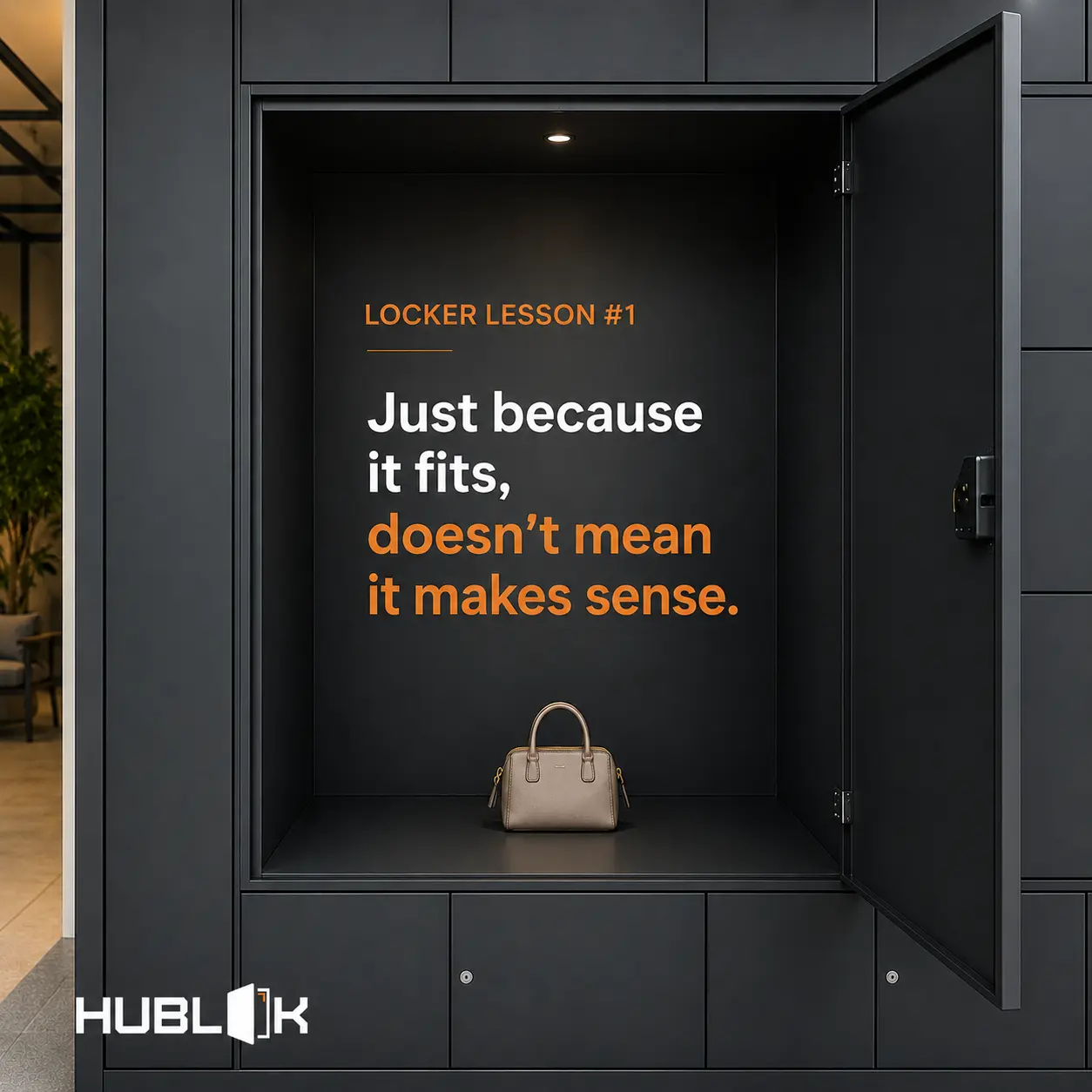
Choosing the largest possible locker compartments might sound sensible, but it can reduce capacity, waste valuable floor space and increase project costs.
When planning a locker project, one request we hear fairly regularly is:
“Can we make every locker large enough for a suitcase?”
It sounds sensible. Larger lockers provide more flexibility, so surely making every compartment large enough for almost anything must be the safest choice?
Not necessarily.
In practice, oversized compartments can result in fewer available lockers, wasted space and a more expensive solution that does not reflect how people will actually use it.
Start with what people are storing
The right locker size depends entirely on the application.
In a workplace, users may primarily need space for:
- A laptop bag or backpack
- A coat
- Personal belongings
- Small work equipment
- IT assets awaiting collection or return
In a leisure or public venue, the requirement may be different. Visitors might need to store handbags, shopping bags, helmets, coats or occasional luggage.
The important point is that not every user will require the largest available compartment.
Providing an appropriate mix of sizes can accommodate occasional larger items without sacrificing the overall capacity of the locker bank.
Oversized lockers reduce capacity
Every project has a limited amount of wall and floor space.
If every compartment is designed around the largest possible item, fewer individual lockers can be fitted into that space. This can create problems during busy periods, even though many of the compartments may contain only a small bag or coat.
The issue is not whether the item fits.
The issue is whether the available space is being used intelligently.
Bigger can also mean more expensive
Larger compartments usually require more materials and a greater overall locker footprint. Depending on the project, they may also affect transportation, installation and the amount of usable space available elsewhere in the building.
That does not mean large lockers should be avoided. They can be essential for luggage, specialist equipment and particular user groups.
It simply means they should be included where there is a genuine requirement, rather than being selected as the default size for every user.
A carefully considered mix usually works better
A combination of small, medium and large compartments will often provide a better balance between flexibility and capacity.
Before deciding on locker sizes, we would normally consider:
- What users are likely to store
- How often larger items need to be accommodated
- The number of expected users
- Peak demand rather than only average demand
- Whether lockers are assigned or shared
- Accessibility requirements
- The available wall and floor space
- Whether the requirements may change in the future
This allows the locker layout to be designed around real behaviour rather than assumptions.
The takeaway
Good locker design is not about making every compartment as large as possible.
It is about providing the right number, size and combination of compartments for the people who will actually use them.
Just because it fits, doesn’t mean it makes sense.